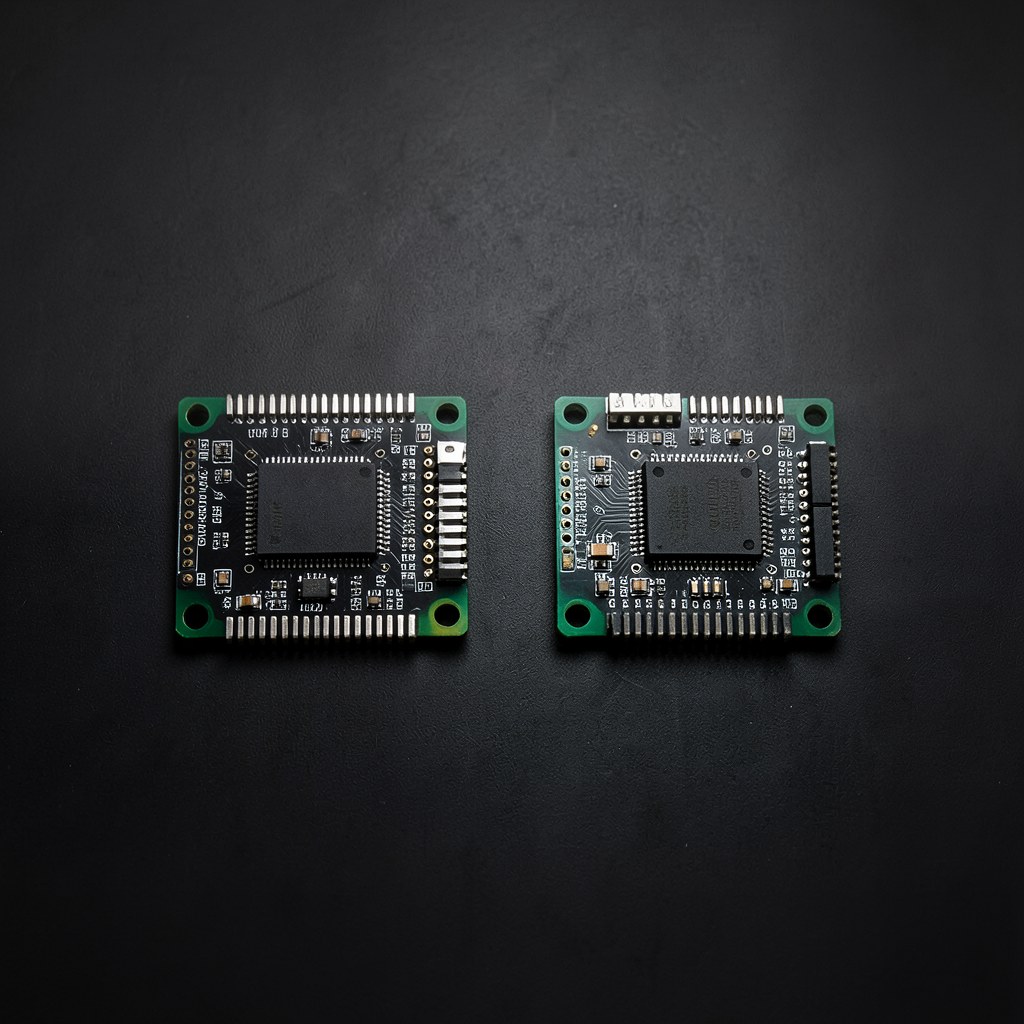
Toradex Jetson Alternative for Custom Carrier Board Bringup
Hardware startups building on NVIDIA Jetson reach a specific inflection point: the custom carrier board is back from manufacturing, the team has JetPack flashed, and nothing boots. Or it boots, unreliably. Or the GMSL2 cameras produce corrupted frames. Or the BSP won’t hold together long enough to validate anything. The question at that point is simple: who do you call?
Search results surface two very different types of answers. One is Toradex, a well-known compute module vendor with a mature engineering services arm. The other is a bring-up specialist who works directly on third-party custom hardware. For hardware startups with a custom Jetson carrier board and a broken bring-up, these two options are not the same thing.
This guide explains what Toradex actually does versus what ProventusNova does, where each company’s scope starts and ends, and how to determine which fits your specific situation. We cover the technical depth, the engagement model, IP ownership, pricing, and the exact scenarios where each is the stronger choice.
This is written for CTOs, technical founders, and engineering leads at hardware startups on NVIDIA Jetson who are evaluating their options. If you’re still choosing a compute platform and haven’t committed to a design, this guide covers that too, the decision looks different than if you already have hardware that needs to work.
Key Insights
-
Toradex sells compute modules and ecosystem services, not custom carrier board bring-up. Toradex’s Apalis, Verdin, and Colibri product lines are System-on-Modules. Their engineering services exist to support customers running Toradex hardware. If you designed a custom Jetson carrier board, Toradex has no pre-validated BSP for your specific layout and isn’t staffed to debug your bring-up failure.
-
Most engineers searching for a Toradex Jetson alternative already have hardware that isn’t working. Two situations reach this search: early-stage platform evaluation (you still have design flexibility), and a manufactured custom Jetson carrier board that won’t boot or won’t stabilize. The second group needs a bring-up specialist with Jetson-specific depth, not a module vendor.
-
ProventusNova resolves custom Jetson carrier board stalls in days, not months. The Foundational Layers™ are pre-validated bring-up patterns built across years of Jetson engagements: U-Boot, JetPack BSP customization, PCIe enumeration, GMSL2 interface setup. Farmhand AI’s custom carrier board went from non-booting to stable in one working session. What takes a new team three months to work through from scratch takes us days.
-
IP ownership diverges sharply between the two models. Toradex’s ecosystem ties you to their hardware and OS (Torizon) for the product lifecycle. ProventusNova engagements end with full IP transfer: all code, kernel configs, BSP documentation, and bring-up guides. Your team owns and maintains the stack with no ongoing dependency on us.
-
Fixed-bid pricing with a delivery guarantee changes the risk calculation. ProventusNova works fixed-bid on every bounded milestone with a 50% discount if any milestone is delayed. You’re not burning hourly rate while your board stays broken. The financial risk stays with us until the milestone is delivered.
What Toradex Is and How It Works
Toradex is a Swiss company founded in 2003 that manufactures System-on-Modules, compact, industrial-grade compute modules that hardware startups and OEMs drop into their product designs. They’re one of the more established SOM vendors in the market, with product lines spanning a range of processor architectures, form factors, and lifecycle commitments.
The product lines
Toradex’s three primary SOM families are:
- Apalis, high-performance modules targeting compute-intensive industrial, vision, and medical applications. Available in multiple form factors with long lifecycle commitments suited for products with extended field deployments.
- Verdin, a compact, newer SOM family with a standardized 314-pin connector interface targeting industrial IoT and embedded edge applications. Designed to let manufacturers swap compute modules as performance requirements change, without redesigning the carrier board.
- Colibri, cost-optimized modules for simpler HMI, IoT, and industrial control applications at volume. Based on ARM Cortex-A and Cortex-M processors.
Each SOM integrates the processor, RAM, storage, and core interfaces into a single, industrially qualified module. The carrier board, designed by the customer, handles the product-specific I/O: connectors, sensors, communication ports, power management, and peripherals. The separation of compute module from carrier board means teams can design the carrier once and, in theory, upgrade or swap compute as needs evolve.
Torizon OS
Torizon is Toradex’s managed Linux distribution, built specifically for their module ecosystem. It’s Debian-based, container-native, and ships with OTA update infrastructure, a device management portal, and remote debugging tooling. For companies that want to delegate OS maintenance, Yocto build pipelines, kernel updates, CVE patching, and stay on a supported, managed platform, Torizon removes a genuine operational burden.
The container-based deployment model lets teams ship application updates independently from the OS layer, which matters for products with frequent software iterations but strict OS stability requirements.
Toradex Engineering Services
Toradex offers Professional Services for customers implementing their modules: carrier board design review, BSP bring-up assistance for Toradex modules, Torizon application porting, DevOps pipeline setup, and production readiness support. They also maintain a partner ecosystem of system integrators who specialize in Toradex-based designs.
Where Toradex’s scope ends
Toradex’s engineering services are built around their own hardware. Their BSP support, Torizon compatibility matrix, and hardware documentation cover Toradex-manufactured modules on Toradex-specified carrier interfaces. This is by design, they’ve invested years in validating their modules and building support infrastructure for their ecosystem.
What this means in practice: if you have a custom NVIDIA Jetson carrier board, using NVIDIA JetPack rather than Torizon, with PCIe, GMSL2, or CSI interfaces that Toradex never manufactured around, their engineering services don’t cover that. They have no pre-validated BSP for your carrier board layout, and they’re not going to write V4L2 drivers for your GMSL2 camera integration on Jetson Orin hardware. The technical expertise Toradex has built is deep within their product ecosystem and doesn’t translate to bring-up work on third-party hardware.
This is a scope boundary, not a criticism. Toradex built a successful business around their hardware ecosystem. The problem arises when startups assume “Toradex has engineering services” means “Toradex can fix my Jetson bring-up problem”, it doesn’t.
What ProventusNova Is and How It Works
ProventusNova is a specialized embedded software consultancy. The focus is narrow by design: NVIDIA Jetson and MediaTek Genio hardware, specifically the software stack that turns a custom carrier board into a working device. Board bring-up. Camera driver integration. GStreamer pipeline architecture. TensorRT and DLA inference deployment. Documentation and IP transfer.
The typical client is a hardware startup that has a custom Jetson carrier board and a blocked bring-up. They’ve spent weeks, sometimes months, debugging a non-booting board, corrupted camera frames, or JetPack BSP issues that aren’t documented anywhere. They need a result on a timeline, at a predictable cost, with full ownership of everything built.
The Dead Silicon to Demo™ Framework
ProventusNova’s engagements follow a five-stage framework from stalled hardware to field-ready product:
| Stage | Name | Deliverable | Timeline |
|---|---|---|---|
| 1 | Triage | Root cause diagnosis, written report | Hours 1–8 |
| 2 | Foundation | Stable, validated boot on custom carrier | Days 1–7 |
| 3 | Sight | Frame-perfect, synchronized camera pipeline | Days 7–21 |
| 4 | Intelligence | Running inference on-device at target latency | Days 14–60 |
| 5 | Demo-Ready | Field-ready stack, full IP transfer and documentation | Days 60–105 |
Not every client needs all five stages. A Board BringUp engagement covers Stages 1–2. Camera driver development adds Stage 3. The full 15-week stack takes a custom carrier board from non-booting to field-ready, with every layer validated, documented, and handed off.
The Foundational Layers™
Speed on bring-up engagements comes from the Foundational Layers™, pre-validated modular architecture built across years of Jetson bring-up engagements on real customer hardware:
- Board Bring-Up Layer: Power sequencing, U-Boot, JetPack BSP, PCIe, USB 3.x, GMSL2 interfaces
- Camera Integration Layer: V4L2 driver templates, CSI/GMSL2 synchronization logic, FPD-Link adapter patterns
- Media Pipeline Layer: GStreamer pipelines optimized for Jetson Orin hardware encode/decode, RTSP, WebRTC
- AI Inference Layer: TensorRT conversion, DLA routing, latency/throughput optimization for target hardware
- Documentation & Transfer Layer: Kernel configs, driver source, bring-up guides written for internal engineering handoff
These aren’t starting-point templates, they’re configurations that have been validated on production hardware across dozens of engagements. What takes a new team three months to debug cold, the Foundational Layers™ resolve in days because we’ve already been through those specific combinations on other carriers, for other startups.
The Proof Sprint™
New clients start with the Proof Sprint™: a bounded 14-day engagement scoped to a single milestone, Board BringUp, Camera Driver Integration, or EdgeAI Model Deployment. One deliverable, one scope, fixed price. If we miss the milestone, you don’t pay full rate. If you’re not satisfied after the first two weeks, keep everything we built and pay nothing.
The Proof Sprint™ structure eliminates the risk of a long open-ended engagement with an unknown vendor. Two weeks to a working result, or the financial risk stays with us.
Farmhand AI: one working session
Farmhand AI had a custom NVIDIA Jetson carrier board designed and manufactured for their agricultural EdgeAI product. It wouldn’t boot. BSP and kernel configuration gaps had stalled the project, the team had the hardware, but board bring-up had completely stalled.
They engaged ProventusNova for a Board BringUp sprint, Stages 1–2 of the Dead Silicon to Demo™ framework. One working session: stable boot, confirmed. The team received documented BSP configuration, kernel setup, and a bring-up guide specific to their hardware layout. The engineers who had been blocked for months were working on the application layer the next day.
That’s not an edge case. It’s what happens when the Foundational Layers™, pre-validated BSP patterns, tested kernel configurations, driver templates for GMSL2 and CSI, are applied to new hardware instead of assembled from scratch every time.
Toradex vs ProventusNova: Head-to-Head Comparison
| Capability | Toradex | ProventusNova |
|---|---|---|
| Core offering | System-on-Modules + Torizon OS | Custom Jetson carrier board bring-up |
| Best for | Teams choosing the Toradex SOM ecosystem | Teams blocked on custom Jetson hardware |
| Custom carrier board support | ✗ Not in scope | ✓ Core service |
| NVIDIA Jetson expertise | ⚠ Toradex modules only | ✓ All Jetson variants, any carrier board |
| BSP / kernel configuration | ✓ For Toradex modules | ✓ Any third-party carrier layout |
| GMSL2 / CSI camera drivers | ✗ Not offered | ✓ Stage 3 service |
| Time to stable boot | Depends on module + your design | ✓ 7 days (Stages 1–2) |
| IP ownership | ⚠ Tied to Toradex hardware and OS | ✓ Full transfer, no ongoing dependency |
| Fixed-bid pricing | ✗ Not the standard model | ✓ Fixed-bid on every milestone |
| Delivery guarantee | ✗ Not specified | ✓ 50% discount if any milestone delayed |
| Risk-free first milestone | ✗ Not offered | ✓ Proof Sprint™, full refund if unsatisfied |
| Ongoing vendor relationship | ✓ Long-term ecosystem support | ✗ Designed for clean handoff and exit |
Where Toradex Is Stronger
Compute module selection and long-lifecycle industrial support
If you’re in the hardware platform selection phase, before a carrier board is designed, Toradex has a real advantage. Their SOM portfolio covers a wide range of processor architectures with 10+ year product lifecycle commitments on most product lines. For medical devices, industrial controllers, and factory automation equipment with extended field deployments and strict supply chain requirements, that long-lifecycle guarantee matters more than bring-up speed.
Managed OS and fleet infrastructure
Torizon OS removes a real operational burden for teams that don’t want to maintain a custom Yocto build. Container-native deployment, OTA update pipelines, device management portal, remote debugging, Toradex has built and maintains that infrastructure. For products where firmware update reliability over years of field deployment is a primary engineering concern, Torizon is worth evaluating seriously. It’s not marketing, BEAM-based IoT companies and managed fleet products have genuine reasons to want this kind of vendor-backed OS support.
Standardized carrier board ecosystem
The Verdin and Apalis form factors have an ecosystem of off-the-shelf carrier boards from Toradex and third-party vendors. If your product can be built on a standard carrier board layout, you skip custom bring-up entirely. Time-to-market shortens, and the design review process is simpler. For a startup where hardware differentiation isn’t in the carrier board, just in the sensors, enclosure, and application, the standard SOM path is faster.
Where ProventusNova Is Stronger
Custom carrier board bring-up on any Jetson hardware
This is the core distinction. Toradex doesn’t have BSP configurations for your specific carrier board. ProventusNova does, or builds them faster than any team starting from scratch. The Foundational Layers™ cover the bring-up patterns that appear repeatedly across custom Jetson carrier designs: power sequencing anomalies, PCIe enumeration failures, USB 3.x topology issues on JetPack 6, device tree mismatches on custom GMSL2 topologies.
If your board won’t boot, or boots to a crash, or your GMSL2 pipeline corrupts frames on four of six sensors, that’s a software layer problem on your specific hardware. It needs someone who has debugged that exact combination before, not a module vendor who never manufactured your carrier.
Speed from accumulated pattern recognition
Driver Hell™ is a documented failure mode in embedded hardware startups: engineers spend weeks or months debugging PCIe enumeration failures, USB issues after JetPack version upgrades, GMSL2 camera synchronization problems, or kernel panics that don’t reproduce against any public documentation. The forums don’t have the answer. Internal debugging burns another sprint.
ProventusNova has been through these failure modes on other boards, for other startups, repeatedly. UncommonLab’s team was blocked for weeks on a USB enumeration failure after upgrading to JetPack 6, a regression that wasn’t documented anywhere. Root cause was found in 4 hours. Full fix delivered in under 20 hours. That turnaround came from having seen the same regression on a different startup’s board six months earlier.
Fixed-bid pricing with delivery accountability
ProventusNova charges fixed-bid. If the Board BringUp sprint takes longer than scoped, we absorb that cost, not you. The 50% milestone discount if any milestone is delayed means our incentives align with yours: deliver the result, on schedule. The Proof Sprint™ extends this to a zero-risk first milestone, not satisfied after two weeks, keep everything built and pay nothing.
There’s no hourly rate burning while your board stays broken. The financial risk stays with us until the milestone is done.
Full IP transfer with zero ongoing dependency
When a ProventusNova engagement ends, everything transfers: code, kernel configurations, BSP documentation, bring-up guides, driver source. Your engineering team is briefed on the full stack and can maintain and extend it independently. No retainer. No ongoing license. No black box.
Toradex’s model keeps you in their ecosystem long-term, which is a feature if you chose it deliberately, and a constraint if you didn’t. ProventusNova’s model is designed to exit cleanly. The goal is a team that can own the stack without us.
Pricing
Toradex: Module pricing varies by product line and order volume. Verdin and Apalis modules are available direct and through distributors at per-unit pricing. Engineering services from Toradex Professional Services or their partner network are typically billed at hourly or project rates. Torizon OS subscription pricing is based on connected device count at scale.
ProventusNova: Fixed-bid on every bounded milestone. The Proof Sprint™ is the entry point, a 14-day engagement scoped to one deliverable. Board BringUp (Stages 1–2) is the most common starting scope. Full 15-week Dead Silicon to Demo™ stack engagements cover all five stages from stalled board to field-ready, production-validated product.
The comparison that matters: one blocked embedded engineer costs $15,000–$25,000 per month in fully loaded labor. Three months of internal bring-up stall is $45,000–$75,000 in engineering time before anyone accounts for the delayed milestone’s downstream cost, a missed investor demo, a delayed field trial, a funding round that slips. A Board BringUp sprint that resolves in 7 days typically costs significantly less than a single month of stalled work. And you get a working result, not hours on a timesheet.
Which Teams Should Choose Toradex
Toradex is the stronger choice when your product can be built on their SOM ecosystem and you haven’t committed to a custom carrier board design. Specifically:
- You’re in hardware platform selection, before schematic capture, and evaluating compute module options
- Your product fits within Toradex’s module form factors (Verdin, Apalis, or Colibri)
- You want a vendor-managed OS (Torizon) for OTA updates, device fleet management, and long-term OS support
- Your product has a 10+ year field deployment lifecycle where compute module longevity and supply chain guarantees matter
- Application-layer connectivity, OTA reliability, and container-based deployment are primary engineering priorities
- Your team doesn’t want to maintain a custom Yocto or buildroot environment
Which Teams Should Choose ProventusNova
ProventusNova fits if you already have a custom Jetson Orin carrier board and the blocker is at the software layer. Specifically:
- Your custom carrier board isn’t booting, boots unreliably, or won’t hold a stable JetPack environment
- Your team is blocked on BSP, kernel configuration, device tree, or driver integration
- You need GMSL2, CSI, or FPD-Link camera driver development on custom hardware
- You need GStreamer pipeline work, TensorRT deployment, or DLA optimization on Jetson Orin
- You need a fixed-scope, fixed-bid engagement with a delivery guarantee, no hourly billing while blocked
- You want full IP transfer at completion so your team owns and maintains the stack
Comparing against other embedded software options? See also our ProventusNova vs Elixir Embedded breakdown for how we compare against an IoT firmware specialist.
The Bottom Line
Toradex and ProventusNova operate at different stages of the same product lifecycle, and solve different types of problems.
Toradex is a hardware company. You buy their modules, build within their ecosystem, and stay in it. That’s a good deal if you’re making a deliberate architectural choice for the SOM path, particularly for products where Torizon OS’s fleet management infrastructure is genuinely useful and carrier board standardization is a feature, not a constraint.
ProventusNova is a bring-up specialist. We take custom Jetson carrier boards from non-booting to validated, documented, and field-ready, on a fixed timeline, at fixed cost, with full IP transfer at the end. If your hardware already exists and the software layer is what’s blocking you, that’s the relevant choice.
Ready to find out if we’re the right fit? Book a free 30-minute scoping call, we’ll tell you exactly what’s blocking your board, what it takes to fix, and what it costs. No pitch. We respond within 2 hours.
Relevant Services
NVIDIA Jetson Expert Support
Stuck on a Jetson bring-up?
We've debugged this failure mode before. BSP, device tree, camera pipelines, OTA, most blockers clear in the first session. No long retainers. No guessing.
Frequently Asked Questions
What is the difference between Toradex and ProventusNova for Jetson?
Toradex makes SOMs and provides engineering services for their own hardware ecosystem. ProventusNova does custom carrier board bring-up on NVIDIA Jetson, including hardware Toradex never manufactured. Toradex helps teams adopt their module stack. We unblock teams whose custom Jetson board isn't working.
Can Toradex help with custom Jetson carrier board bring-up?
No. Toradex engineering services are scoped to their own hardware, Apalis, Verdin, and Colibri modules. They don't maintain BSP configurations for third-party carrier board layouts and don't provide V4L2 driver development for custom GMSL2 camera integrations on Jetson hardware.
How long does custom Jetson carrier board bring-up take with ProventusNova?
Board BringUp (Stages 1-2) delivers a stable boot in 7 days. Triage runs in hours 1-8. Farmhand AI went from months of internal stall to a booting carrier board in one working session.
Is Toradex a good Jetson alternative for custom carrier board bring-up?
No, they're in a different category. Toradex is a SOM vendor. Strong choice if you're on the module path. If you have a custom Jetson carrier board that won't boot, you need a bring-up specialist with pre-validated BSP patterns and driver templates for third-party hardware.
What does custom Jetson carrier board bring-up cost?
Fixed-bid with a 50% milestone discount if any milestone slips. One blocked embedded engineer costs $15,000-$25,000 a month. A Board BringUp sprint that wraps in 7 days almost always costs less than one month of stalled internal work.

Written by
Aarón AnguloCo-Founder & CEO · ProventusNova
Obsessed with client outcomes. Aarón ensures every engagement delivers real results, on time, on scope, no exceptions.
Connect on LinkedInRelated Articles
The 30% Tax™ Is Not an Upwork Problem. It's a Jetson Expertise Problem.
20-30% of every engineering hour on Jetson BSP work is platform ramp. It hits internal teams the same as contractors. Here's what it costs and why.
AGPL to Permissive License Migration on Jetson TensorRT
How we migrated a Jetson TensorRT stack off AGPL YOLO-World and FastSAM to Apache-2.0 models, and the checkpoint trap that almost broke it.
Argus camera driver on Jetson: nvarguscamerasrc setup, ISP pipeline, and debugging
Set up the Argus camera driver on NVIDIA Jetson: nvargus-daemon, nvarguscamerasrc pipelines, LibArgus C++ API, ISP features, and common Argus errors debugged.
Best Companies for Custom Camera Driver Development on NVIDIA Jetson
Comparing the top options for V4L2, MIPI CSI, and GMSL2 camera driver development on NVIDIA Jetson, specialists, hardware vendors, and freelancers.