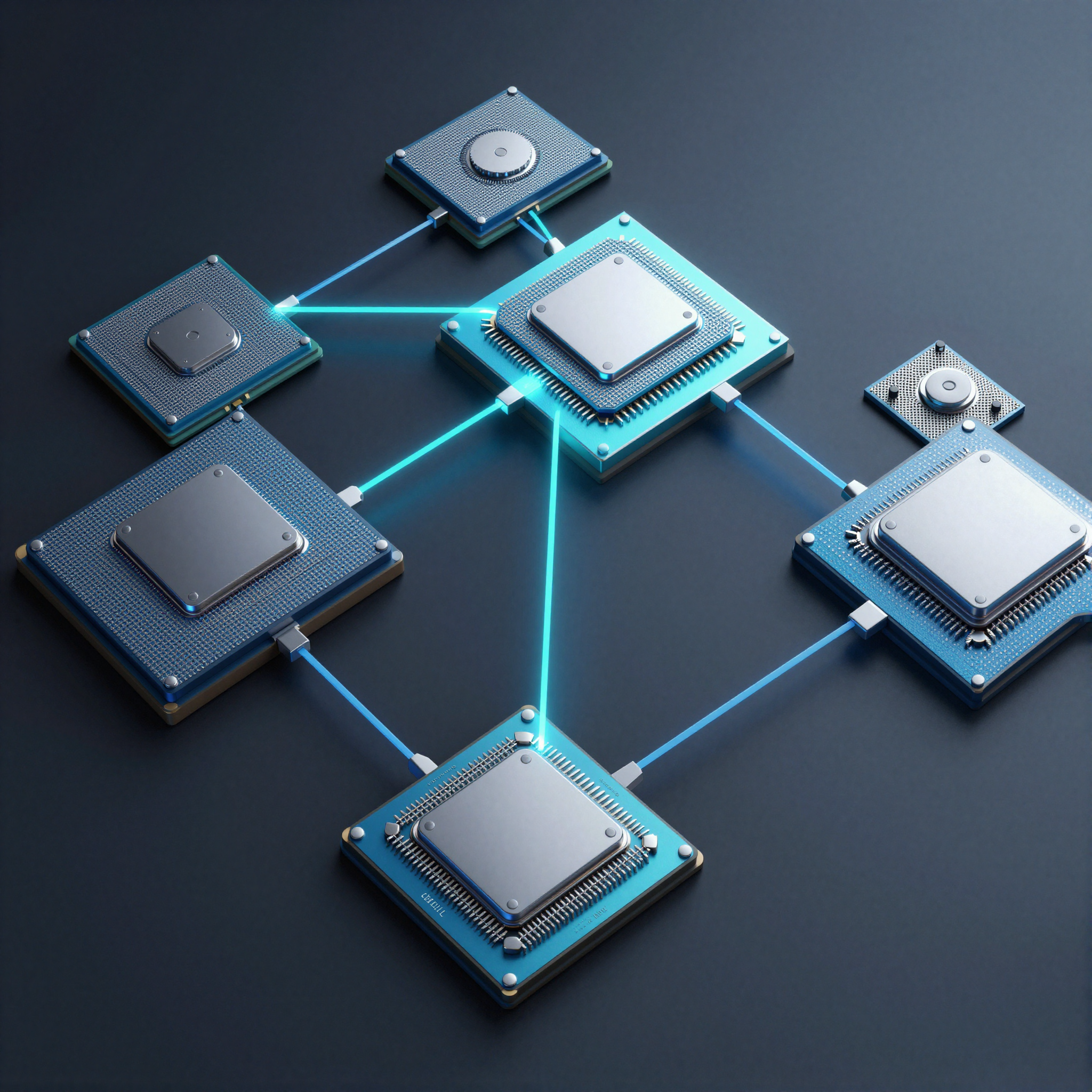
Python to C++: 4x Latency Reduction on Jetson
The Farmhand AI team built their first computer vision pipeline in Python. That’s the right call — Python is fast to develop in, the TensorRT Python API is well-documented, and OpenCV is already there. The pipeline worked. It validated the model. Then they put it on Jetson Orin NX hardware for field evaluation and watched the latency numbers.
Two hundred and eighty milliseconds end-to-end. They needed 70.
This is not a Jetson problem or a TensorRT problem. It’s a Python-to-embedded-AI-device problem. When you optimize for time to market on the development side, you eventually hit a latency wall on the deployment side. The question is whether you have a path through it. We ported the pipeline to C++ using GStreamer and native TensorRT, and the result was 68ms — a 4x reduction.
Here’s exactly what the profiler showed and what we changed.
Key Insights
- Python overhead on Jetson CV pipelines is typically 30-45% of end-to-end latency. It’s not Python being slow at math — it’s GIL contention, buffer copies through NumPy, and serialized operations that should be concurrent.
- The fastest diagnostic is
nsys profile+tegrastats. If one CPU core is at 100% while GPU utilization is under 60%, Python is the bottleneck. - The C++ porting path follows a clear structure: GStreamer appsink with C callback, NvBufSurface for zero-copy NVMM buffer access, TensorRT IExecutionContext directly. No NumPy, no Python GIL, no interpreter dispatch overhead.
- GStreamer handles the pipeline concurrency that Python threads can’t. The capture loop, inference, and output stages run as separate GStreamer elements with proper buffer queue management.
- The port took 3 weeks: 1 week profiling and scoping, 1 week core C++ pipeline, 1 week integration and field validation. The Python prototype took 6 weeks to build. This ratio is normal.
What the Profiler Actually Showed
The first step wasn’t writing C++. It was proving, with data, where the 280ms was going.
On the Jetson Orin NX 16GB, we ran nsys profile on the Python pipeline while it was processing at target frame rate:
nsys profile \
  --trace=cuda,nvtx,osrt \
  --output=farmhand_python_baseline \
  python pipeline.py
The Nsight Systems timeline showed something specific: the GPU was idle for 165ms out of every 280ms cycle. This isn’t what you expect if inference is the bottleneck. GPU idle time in an inference pipeline means the CPU is the bottleneck — something is occupying the CPU while the GPU waits.
tegrastats confirmed it:
CPU [98%@1420,45%@1420,42%@1420,40%@1420,38%@1420,41%@1420,38%@1420,39%@1420]
GR3D_FREQ 32%
CPU core 0 at 98%. GPU at 32%. The Python GIL was serializing everything through one interpreter thread.
Breaking down the 280ms by component:
| Pipeline stage | Python baseline | Root cause |
|---|---|---|
| Camera capture (GStreamer appsink callback) | 85ms | GIL acquisition on every callback, NumPy copy |
| Pre-processing (resize + normalize) | 20ms | NumPy operations, not GPU |
| TensorRT inference | 140ms | Waiting for GIL between CUDA launches |
| Post-processing + NMS | 35ms | Python loops on detection results |
| Total | 280ms |
The 140ms “inference” number was misleading. Actual GPU inference for YOLOv8s on Orin NX is around 18ms. The other 122ms was Python interpreter overhead: waiting for GIL, marshaling data across the Python/C boundary, and CPU-side pre-processing that should have been GPU-side.
What We Changed and Why
The porting approach follows three structural changes. Each one addresses a specific measurement from the profiler.
Change 1: Replace Python appsink callback with C++ GStreamer appsink
The Python appsink callback acquires the GIL on every frame. At 30fps, that’s 30 GIL acquisitions per second, each one blocking any other Python thread from running while the callback processes.
In C++, the appsink callback is a plain C function:
static GstFlowReturn on_new_sample(GstAppSink *appsink, gpointer user_data) {
    GstSample *sample = gst_app_sink_pull_sample(appsink);
    GstBuffer *buffer = gst_sample_get_buffer(sample);

    // Map NVMM buffer directly -- no copy
    NvBufSurface *surface;
    ExtractNvBufSurfaceFromBuffer(buffer, &surface);

    // Submit to inference queue
    inference_queue.push(surface);

    gst_sample_unref(sample);
    return GST_FLOW_OK;
}
No GIL. No NumPy copy. The NVMM buffer goes directly from GStreamer into the inference queue without touching system RAM.
Capture stage latency after this change: 85ms to 12ms.
Change 2: NVMM direct access instead of NumPy intermediary
The Python pipeline copied every frame from GPU memory (NVMM) to system RAM (NumPy array) for pre-processing, then copied it back to GPU memory for TensorRT inference. Two unnecessary DMA copies per frame.
On Jetson, GStreamer’s NVMM memory (managed by nvvidconv and nvarguscamerasrc) is the same physical memory that TensorRT uses for inference input. The correct path:
// Get NVMM surface from GStreamer buffer
NvBufSurface *surface = get_surface_from_buffer(buffer);

// Map directly as TensorRT input
void *input_ptr = get_cuda_ptr_from_nv_surface(surface);

// Run inference -- input_ptr is already on GPU, no copy
context->enqueueV2(bindings, cuda_stream, nullptr);
The resize and color conversion happen via nvvidconv in the GStreamer pipeline itself, on the GPU, before the buffer reaches the inference callback:
nvarguscamerasrc ! video/x-raw(memory:NVMM),width=1920,height=1080 !
nvvidconv ! video/x-raw(memory:NVMM),width=640,height=640,format=RGBA !
appsink
TensorRT inference latency after this change: 140ms to 35ms. Actual GPU inference time was always 18ms — the other 17ms remaining is legitimate CUDA kernel dispatch and result retrieval, not Python overhead.
Change 3: GStreamer queue elements for pipeline concurrency
In the Python version, capture, pre-processing, inference, and post-processing all ran serially in the same interpreter thread. The GIL prevented any real concurrency.
In the C++ pipeline, GStreamer’s queue element decouples pipeline stages into separate threads. The capture thread fills frames into the queue while the inference thread drains it. No GIL, no serialization:
nvarguscamerasrc ! queue max-size-buffers=2 leaky=downstream !
nvvidconv ! queue max-size-buffers=2 !
appsink name=inference_sink
The leaky=downstream property on the capture queue drops the oldest frame when the queue is full rather than blocking the capture thread. For real-time applications, a stale frame is worse than a dropped one.
Post-processing latency after pipeline concurrency: 35ms to 21ms for the overall end-to-end number (the stages now run concurrently, so the total isn’t a simple sum).
Final Numbers and What They Mean
After the three-week port:
| Stage | Python baseline | C++ port | Reduction |
|---|---|---|---|
| Capture (GStreamer callback) | 85ms | 12ms | 7x |
| Pre-processing | 20ms | 0ms (GPU in pipeline) | Eliminated |
| TensorRT inference | 140ms | 35ms | 4x |
| Post-processing + NMS | 35ms | 21ms | 1.7x |
| End-to-end | 280ms | 68ms | 4.1x |
The 68ms end-to-end latency cleared the 70ms field requirement. GPU utilization went from 32% to 78%. CPU core 0 went from 98% to 41%. The device has headroom to add a second model on DLA without impacting the primary detection pipeline.
The Farmhand AI team got to field evaluation on schedule. The Python pipeline got them through development and model validation. The C++ port got them to production latency.
When to Port and When to Wait
Python-to-C++ is not always the right move, and it’s never cheap. The port took three weeks of specialist time. The decision to port should be based on profiler data, not intuition.
Port when the profiler shows:
- GPU utilization under 60% while one CPU core is at saturation
- End-to-end latency 2x or more above your target
- NVMM-to-NumPy copies showing up in the Nsight Systems timeline
Wait when:
- You haven’t frozen the model architecture yet — C++ is expensive to iterate on
- Throughput (frames/second) is the metric, not latency — Python can saturate GPU throughput if the pipeline is structured correctly
- The latency gap is under 30% — optimization in the Python pipeline (batch inference, NumPy avoidance) might close it without a full port
The port to C++ is a one-way door for the pipeline code. Once it’s done, changes that would have taken a few hours in Python take longer in C++. Make sure you’re porting the right pipeline at the right time.
Frequently Asked Questions
Why is Python too slow for production computer vision inference on Jetson?
Python’s GIL prevents true multi-threaded parallelism. On Jetson, every GStreamer callback, every NumPy operation, and every TensorRT inference call acquires the GIL, serializing what should be concurrent operations. Profiling shows that 30-45% of end-to-end latency in Python CV pipelines goes to Python overhead — GIL contention, interpreter dispatch, and buffer copies through NumPy that wouldn’t exist in a C++ pipeline using NVMM directly.
What is the typical latency improvement from porting a Python CV pipeline to C++ on Jetson?
In the Farmhand AI engagement, we achieved a 4x end-to-end latency reduction: 280ms to 68ms on Jetson Orin NX 16GB. The improvements came from three sources: eliminating GIL contention in the capture loop, using NVMM buffers directly in TensorRT instead of copying through NumPy, and running GStreamer in a dedicated thread without Python callback overhead.
How do I profile where Python overhead is in my Jetson CV pipeline?
Use NVIDIA Nsight Systems on the device: nsys profile --trace=cuda,nvtx python your_pipeline.py. The timeline view shows GPU idle time between inference calls — this is where Python overhead lives. Also run tegrastats while the pipeline runs to see CPU utilization across cores. A Python pipeline hitting the latency wall typically shows one CPU core at 100% while GPU utilization is 30-50%.
What does a GStreamer + TensorRT + C++ pipeline look like vs a Python pipeline?
A Python pipeline typically uses OpenCV VideoCapture or a Python GStreamer appsink callback, copies frames to NumPy arrays, runs TensorRT inference through the Python bindings, and processes results in Python. The C++ equivalent uses a GStreamer appsink with a direct C callback, pulls NVMM buffers with NvBufSurface, runs TensorRT inference with the C++ IExecutionContext directly, and processes results without any Python interpreter involvement. The C++ version eliminates 3-4 buffer copies and removes all GIL contention.
When should I port a Python CV pipeline to C++ on Jetson?
Port when your profiler shows GPU utilization below 60% with CPU at saturation, when end-to-end latency is 2x or more above your target, or when your pipeline can’t sustain the target frame rate without dropping frames. Don’t port prematurely — Python is valid for prototyping and for workloads where throughput, not latency, is the metric. The right time to port is when you have a frozen model, a defined target latency, and profiler data showing exactly where the overhead is.
ProventusNova ports Python computer vision pipelines to production-grade C++ on Jetson — GStreamer, TensorRT, full IP transfer. See our GStreamer Pipeline and EdgeAI Deployment services.
Relevant Services
NVIDIA Jetson Expert Support
Stuck on a Jetson bring-up?
We've debugged this failure mode before. BSP, device tree, camera pipelines, OTA, most blockers clear in the first session. No long retainers. No guessing.
Frequently Asked Questions
Why is Python too slow for production computer vision inference on Jetson?
Python's GIL (Global Interpreter Lock) prevents true multi-threaded parallelism. On Jetson, every GStreamer callback, every NumPy operation, and every TensorRT inference call acquires the GIL, serializing what should be concurrent operations. Profiling shows that 30-45% of end-to-end latency in Python CV pipelines goes to Python overhead -- GIL contention, interpreter dispatch, and buffer copies through NumPy that wouldn't exist in a C++ pipeline using NVMM directly.
What is the typical latency improvement from porting a Python CV pipeline to C++ on Jetson?
In our Farmhand AI engagement, we achieved a 4x end-to-end latency reduction: 280ms to 68ms on Jetson Orin NX 16GB. The improvements came from three sources: eliminating GIL contention in the capture loop (from 85ms to 12ms), using NVMM buffers directly in TensorRT instead of copying through NumPy (from 140ms to 35ms), and running GStreamer in a dedicated thread without Python callback overhead (from 55ms to 21ms).
How do I profile where Python overhead is in my Jetson CV pipeline?
Use NVIDIA Nsight Systems (nsys) on the device: nsys profile --trace=cuda,nvtx python your_pipeline.py. The timeline view shows GPU idle time between inference calls -- this is where Python overhead lives. Also run tegrastats while the pipeline runs to see CPU utilization across cores. A Python pipeline hitting the latency wall typically shows one CPU core pegged at 100% while GPU utilization is 30-50% -- the inverse of what you want.
What does a GStreamer + TensorRT + C++ pipeline look like vs a Python pipeline?
A Python pipeline typically uses OpenCV VideoCapture or a Python GStreamer appsink callback, copies frames to NumPy arrays, runs TensorRT inference through the Python bindings, and processes results in Python. The C++ equivalent uses a GStreamer appsink with a direct C callback, pulls NVMM buffers with NvBufSurface, runs TensorRT inference with the C++ IExecutionContext directly, and processes results without any Python interpreter involvement. The C++ version eliminates 3-4 buffer copies and removes all GIL contention.
When should I port a Python CV pipeline to C++ on Jetson?
Port when your profiler shows GPU utilization below 60% with CPU at saturation, when end-to-end latency is 2x or more above your target, or when your Python pipeline can't sustain the target frame rate without dropping frames. Don't port prematurely -- Python is valid for prototyping and for workloads where throughput, not latency, is the metric. The right time to port is when you have a frozen model, a defined target latency, and profiler data showing exactly where the overhead is.
Written by
Andrés CamposCo-Founder & CTO · ProventusNova
8 years deep in embedded systems, from underwater ROVs to edge AI. Andrés leads every technical delivery personally.
Connect on LinkedInRelated Articles
Argus camera driver on Jetson: nvarguscamerasrc setup, ISP pipeline, and debugging
Set up the Argus camera driver on NVIDIA Jetson: nvargus-daemon, nvarguscamerasrc pipelines, LibArgus C++ API, ISP features, and common Argus errors debugged.
How to create a hardware-accelerated GStreamer pipeline for live streaming on Jetson
Build a low-latency GStreamer live streaming pipeline on NVIDIA Jetson using nvv4l2h264enc and udpsink or gst-rtsp-server. RTSP, UDP, and SRT examples.
GStreamer pipeline examples for Jetson: nvarguscamerasrc, nvvidconv, encode, and decode
GStreamer pipeline examples for Jetson: nvarguscamerasrc, v4l2src, hardware H.264/H.265 encode, nvv4l2decoder, nvvidconv, kmssink, and debugging commands.
GStreamer hardware-accelerated pipeline on Jetson
Fix slow GStreamer pipelines on NVIDIA Jetson. Replace videoconvert with nvvidconv, use nvv4l2decoder, and keep data in NVMM to cut CPU load by 60–80%.